

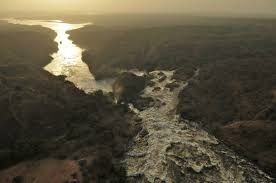
Shafiqul Islam, Director of Water Diplomacy, Professor of Civil and Environmental Engineering and Professor of Water Diplomacy at the Fletcher School of Law and Diplomacy at Tufts University, speaks to The Daily Star.
Shafiqul Islam
Please tell us a bit about the importance of water diplomacy in the context of Bangladesh.
Shafiqul Islam (SI): At the World Economic Forum in Switzerland, they put water at the top of the international agenda, meaning water is becoming a global security threat from multiple perspectives. There are competing demands of water for humans, agriculture, ecosystems, industries, urban development, etc. Given that the amount of water is fixed and the number of usage is increasing, conflict is inevitable.
Although Bangladesh is considered a flood-prone country, over 80% of the rain in a year is seen during 100 days and 100 hours, primarily in July, August and September. The other nine months are fairly dry. Let’s take the Ganges, for instance. Most of the Ganges flow through Bangladesh occurs during the rainy season when you don’t really need the water. On the other hand, you have very limited flow during dry season when you actually need it. So we have to deal with this kind of asymmetry in water availability.
For all latest news, follow The Daily Star’s Google News channel.
Water is a renewable resource that can be used multiple times for multiple usages. For example, water for household use today can be used tomorrow to grow rice. The whole premise of water diplomacy is to use flexibility in water use and allocation to create options that currently don’t exist.
TDS: Would you say there’s a lack of regional cooperation on such issues?
SI: Let’s focus on the word cooperation for a minute. China has decided to share rainfall and stream flow data with Bangladesh. So how will it help? The data being shared is of an area almost 2500 km upstream. When it rains in China it takes about 20 days for it to reach Bangladesh. The sharing of data is surely a sign of cooperation but it won’t address the problem of limited water supply in the dry season.
We face a water crisis during the dry season but the data is going to be shared during the rainy season. When we talk about cooperation, we need to think about what that entails. We need to figure out under what situations we’re going to cooperate and how; that’s where the conversation is not happening. We need to first define what the problem is, for instance, is the problem flood, drought or use of water for irrigation? These are all different problems that need to be tackled differently.
For any water problem, we need to ask: Who decides? Water for whom? How are we going to achieve it? For example, if we want to provide water to everyone in the Korail slum, the problem isn’t that WASA doesn’t have water. The problem may be illegal settlement. WASA may consider that by providing water to the slum they’ll be legally acknowledging the settlers in an illegal land. That’s a much more problematic situation than availability of water. We need to diagnose the nature of the problem before we can understand where the bottleneck is to design and implement effective intervention.
TDS: In light of PM Modi’s upcoming visit to Bangladesh, where do you think the focus of bilateral talks should lie in terms of water sharing (if addressed at all)?
SI: India-Bangladesh talks need not be focused on just one river, whether it’s the Teesta, Brahmaputra or Ganges. Conversations about connecting different issues for different rivers need to happen simultaneously — for example, one can think of utilising the flow of the Teesta and the Ganges together as a creative option. If India builds a dam on Teesta, does Bangladesh have a corresponding benefit? If not, can we use the flow in the Ganges to get similar benefits? Can Bangladesh get more of the Ganges flow during the dry season? That’s how we must think. If we focus on the Teesta only, we’ll be stuck. We have to try to link benefits so that we have mutual gains.
India’s hydropower development projects aren’t taking up water; it’s non-consumptive use. If they had used the same water for irrigation then we’d have a problem but if the problem is only hydropower-related, then there are easier solutions. We need to come up with creative options depending on which river we’re talking about and how benefits from multiple rivers can be co-shared for mutual gains.
Complexity of issues as well as competing and often conflicting values and priorities for water allocation make the process of charting a path for the future difficult. Who benefits? Who bears the burden? At what scale? At what price? These difficulties are amplified by practical questions like, how can we reconcile the water needs of India for development with the need for adequate water supply and to minimise salinity intrusion during the dry season for Bangladesh? How can increasing future demand for water meet the previous agreements for the Ganges? How can a new agreement for Teesta relate to larger regional concerns beyond water, or the needs of other GBM basin countries? How does uncertainty related to climate change, demographic shifts, and consumption habits affect annual and long-term operation and management of water in the GBM basin?
These are a small subset of many questions that need to be raised and discussed. More importantly, these questions are contingent upon the context, framing, and choice of the problem’s scale. Consequently, there are no pre-specified solutions to these complex problems. As the Water Diplomacy Framework – developed by academics and practitioners from around the world led by faculty from Tufts University, MIT and Harvard University – argues, complex problems cannot be solved but can be resolved through a negotiated mutual gains approach. Hopefully, the visit of PM Modi will open the door to initiate such a conversation between Bangladesh and India.
TDS: How can the rights of a lower riparian country like Bangladesh be ensured?
SI: These rights look good on paper but it’s hard to implement them in reality. Water treaties aren’t legally binding; what binds them is goodwill. Despite there being wars between India and Pakistan since the Indus Treaty was signed between the two countries in 1960, the treaty is still respected. A trust has to be developed over time.
If Bangladesh and India sign a treaty on the Teesta, a neutral third party could oversee that the treaty is followed through. Since these treaties aren’t enforceable, we have to develop a mutually beneficial mechanism so that they become nearly self-enforcing.
Vilification of a well-known scholar is a threat to us all
Recent intolerance towards different perspectives is unacceptable and go against the values of our Liberation War.
VISUAL: SALMAN SAKIB SHAHRYAR
If you carefully read the introduction of the 15-volume Bangladesh War of Independence: Documents, you will not miss the fact that the original goal of the government initiative was to write a comprehensive history of the country’s Liberation War. However, the project members chose to collect and publish documents related to the war instead. The reason they cited for this decision was the difficulty of “maintaining impartiality and objectivity and avoiding the possibility of distortion” in writing about a contemporary event, particularly a “revolutionary event” like the Liberation War. They were aware of the diversity of experiences during the war and wanted to ensure the representation of multiple perspectives.
The project was headed by famous litterateur and journalist Hasan Hafizur Rahman, and the authentication committee of the project included famous historians and educationists of Bangladesh, including Prof Mafizullah Kabir, Prof Salahuddin Ahmed, and Prof Anisuzzaman.
For all latest news, follow The Daily Star’s Google News channel.
Stories that we tell ourselves
The publication of the documents was a great service to the nation. Most importantly, they set a standard and provided a guiding spirit for future research on the war. These values have become increasingly relevant in Bangladesh, particularly in light of recent events such as the removal of renowned academician Prof Imtiaz Ahmed from his position as the director of Dhaka University’s Centre for Genocide Studies (CGS). This action was taken following a propaganda campaign against his book Historicizing 1971 Genocide: State versus Person, which was published in 2009. Interestingly, one of the campaigners, Sheikh Hafizur Rahman Karzon, has been appointed as the new director of CGS.
The event has set a dangerous precedent not only for future research on the Liberation War, but also for academic freedom in Bangladesh. It is ironic that this has been done by the same university whose teachers sacrificed their lives to uphold their freedom of thought and conscience during the war.
The most shocking aspect was the statement released by the Dhaka University Teachers’ Association (DUTA). It is disconcerting to think about the future of intellectual freedom in Dhaka University.
Hasan Hafizur Rahman expressed regret in the introduction of the Bangladesh War of Independence: Documents that only 15,000 pages could be published out of their 350,000-page document collection. He hinted that there were many more documents yet to be collected. Although decades have passed since the publication of these valuable volumes of our history, the rest of the documents from their collection remain unpublished. To my knowledge, many of these documents are now gathering dust in the collection of the National Museum.
For the sake of reason, I must ask: if these teachers are truly concerned about the history of the genocide or the Liberation War, why have they remained silent for nearly 13 years since the publication of Prof Imtiaz Ahmed’s book?
It is a globally accepted practice that, when disagreeing with a scholar’s position, one should follow academic norms. These teachers could have written another book or published articles in national and international media or journals to refute Prof Ahmed’s observations. A serious reading of the book and contextualising all its content paint a different picture.
It is noteworthy that the Centre for Genocide Studies, Prof Ahmed’s brainchild, was the first academic initiative of its kind in Bangladesh to study the 1971 genocide.
Criticism of the book is necessary and welcome, as there is no final word on history and no sole arbiter of historical truth. Constructive criticism with honest intent can enrich our understanding of history. However, the recent intolerance towards different perspectives and the vilification of an author with charges of sedition are unacceptable and go against the values of our Liberation War.
We must not forget that the seed of the 1971 genocide was intolerance.
Why won’t the UN recognise 1971 genocide?
The lack of protest against this undemocratic move is also concerning. The reactions I found on social media were mostly defeatist. Some see it as a conflict within various factions of the ruling party, while others have criticised Prof Ahmed’s previous comments that align with the government’s stance, particularly his remark following the US-imposed sanctions against Rab, in which he said Bangladesh need not worry about it. While these criticisms may be valid, they do not justify the defamation and harassment of Prof Ahmed. We must not forget that hatemongers will continue to operate in the future. It is necessary to speak out against such actions, for not doing so will further shrink our free space.
Hasan Hafizur Rahman expressed regret in the introduction of the Bangladesh War of Independence: Documents that only 15,000 pages could be published out of their 350,000-page document collection. He hinted that there were many more documents yet to be collected. Although decades have passed since the publication of these valuable volumes of our history, the rest of the documents from their collection remain unpublished. To my knowledge, many of these documents are now gathering dust in the collection of the National Museum.
If the government is genuinely committed to preserving the history of the Liberation War, they should take the initiative to publish these documents and establish a mechanism to continue the collection, research, and publication of the history of Bangladesh’s Liberation War, while maintaining the highest academic standards.
Shamsuddoza Sajen is a journalist and researcher.
How will our climate budget look post-NAP2050?
The National Adaptation Plan 2023-2050 should make us rethink the way we prepare our climate budget
Two facts related to climate-relevant funding in Bangladesh fascinate me. First, between 2015-16 and 2022-23 fiscal years, Bangladesh allocated 7.26-8.1 percent of its annual national budget as climate budget, which is 0.7-0.8 percent of the national GDP. Second, 18 years ago, the National Adaptation Programme of Action (NAPA) estimated to invest $73.5 million in climate change adaptation over the following few years. But such strategic planning magnified manyfold in October 2022, when the government approved the National Adaptation Plan, 2023-2050 (NAP2050), targeting to spend $230 billion over the next three decades.
Since the government is now preparing its annual national budget for FY2023-24, what changes can we expect to see in the climate-relevant allocations, post-NAP2050?
Nature-based solutions can fight two key battles together
I think we can expect three specific achievable changes in the forthcoming climate budget. First, in the current fiscal year, with a total climate budget of Tk 30,500 crore, the three ministries or divisions (out of 25) with the highest climate allocations are Ministry of Agriculture (Tk 8,667 crore), Local Government Division (Tk 3,768 crore), and Ministry of Water Resources (Tk 3,484 crore). In addition, the climate budget also shows allocations against six thematic areas of the Bangladesh Climate Change Strategy and Action Plan, 2009. Here, the highest allocation is made to food security, social protection, and health (41.87 percent), followed by infrastructure (27.78 percent), mitigation and low-carbon development (13.36 percent), comprehensive disaster management (7.21 percent), capacity-building and institutional strengthening (6.71 percent), and research and knowledge management (3.07 percent). These thematic allocations broadly match the ministerial allocations.
In the FY2023-24 budget, we also need to see the geographical distribution of the climate allocations. The NAP2050 contains the latest climate vulnerability maps of Bangladesh considering a wide range of shocks (e.g. cyclones and floods) and stresses (e.g. rise of sea level and salinity intrusion), prepared by the Center for Environmental and Geographic Information Services (CEGIS). The CEGIS can help the Finance Division to prepare maps combining climate fund allocations against the degree of climate vulnerability. These maps should carry information down to the upazila level, if union-level information is not available for now. We indeed need to know how much money is going to Dhaka and how much to Dacope (Khulna), Derai (Sunamganj) or Dimla (Nilphamari).
Second, in the forthcoming climate budget, a separate section should be added on investments to be made in nature-based solutions (NbS) to tackle climate change. Here, NbS means to protect, restore, create, and manage aquatic and terrestrial ecosystems to adapt to climate change impacts as well as reduce carbon dioxide in the air, while increasing the local biodiversity. Focusing on NbS has two specific rationales. First, the NAP2050 has already included NbS as one of its six main goals. Second, unlike climate finance, our conservation finance is poorly defined and is essentially made of project-based, short-term investments.
The Ministry of Environment, Forest and Climate Change and its concerned departments are showing low interest in sustainable conservation financing. Therefore, we are not going to see much progress in establishing new funds as outlined in the Ecologically Critical Area Management Rules, 2016, the Protected Area Management Rules, 2017, and the Bangladesh Biodiversity Act, 2017 any time soon. But the Kunming-Montreal Global Biodiversity Framework, agreed upon by 188 countries in December 2022 in a global biodiversity meeting in Montreal, Canada, emphasises conservation finance to minimise the current annual gap of $700 billion.

