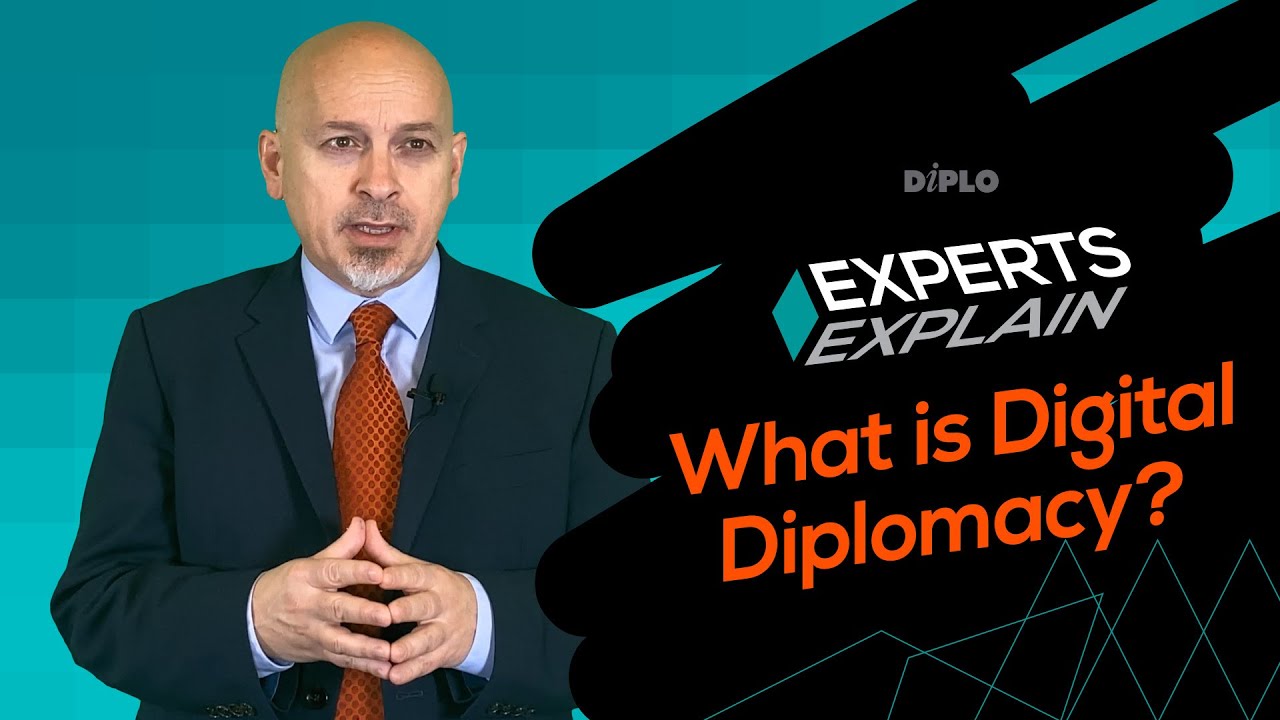
This story is based on the research and teaching I have done about the digital transformation of diplomacy. It begins with a 4-minute video and then clarifies the terminological confusion regarding digital/cyber/tech diplomacy. It lists 25 terms related to technology and diplomacy.
You can then see a methodological frame consisting of the impact of digitalization of the geopolitical environment for diplomacy and new digital topics diplomats negotiate and tools they use. Also, you will find links to literature, courses, AI platforms and apps of relevance for digital diplomacy. Enjoy your journey through a digital transformation of diplomacy.
Jovan
How to handle terminological confusion regarding digital (and) diplomacy?
Before you embark on the digital (and) diplomacy journey, make sure you clarify any terminological ambiguities……
Should it be ‘digital’, ‘cyber’, ‘tech’, ‘net’, ‘virtual’, or ‘e-‘ diplomacy?
The use of different adjectives and prefixes to describe the digitalisation of diplomacy tends to create confusion in discussions and policies in this field. This confusion could be reduced by having clearer instructions on what certain terms, such as ‘cyber’, ‘digital’, and ‘tech’ diplomacy cover.
For example, does ‘digital diplomacy’ refer to negotiations about digital policy issues or the use of Twitter and Facebook for public diplomacy?This Tetris-style animation summarises dilemmas on how to name the digital transformation of diplomacy.
You can find more insights on how to reduce the terminological confusion around the digitalisation of diplomacy in our blog post Different prefixes, same meaning: cyber, digital, net, online, virtual, e-.
You can read more about technology and diplomacy’s different ‘types’.
What are the three fields of digital transformation of diplomacy?
Digital transformation of diplomacy happens in three main areas:
Changes in the political, social, and economic ENVIRONMENT in which diplomacy is conducted: digital and redistribution of power in international relations, new types of conflicts, digital interdependence and sovereignty, etc. (Read more)
The emergence of new policy TOPICS in diplomatic negotiations: more than 50 digital governance topics including cybersecurity, privacy, data governance, e-commerce, cybercrime, and AI governance. (Read more)
The use of digital TOOLS in the practice of diplomacy: social media, online conferencing, big data and AI analysis, etc. (Read more)
What are digital diplomacy trends in 2023?
Digital diplomacy in 2023 will be shaped by fast-changing digital geopolitics. Digital geopolitical tensions show no signs of easing in 2023, especially between the USA and China. Worse, global conflicts and tensions could trigger the fragmentation of the internet. Digital geopolitics will be centred around the protection of submarine cables and satellites, the production of semiconductors, and the free flow of data. Read more…
Focus: A holistic approach toward digital diplomacy gains momentum through the EU digital diplomacy communique and the appointment of the U.S. ambassador for cyberspace and digital policy.
Updates
Positive power of new technologies outweighs risks
First full AI-reporting from the UN meeting
U.S. diplomats need tech skills to compete with China
Digital geopolitics: new ENVIRONMENT for diplomatic activities
Digital dependence makes countries highly vulnerable to any disruption of data flows. Maintaining data flows worldwide is vital to the social stability, economic well-being, and the growth of countries. For example, the disruption of e-commerce, e-banking, and platform services, such as Airbnb and Uber, could cause great economic disruption.
Global geopolitics depends heavily on access to the main internet cables carrying internet traffic between countries and continents. Presently, more than 90% of all global internet traffic flows through submarine cables which mostly follow the old geographical routes used by telegraph cables in the nineteenth century.
Source: TeleGeography
Internet cables are a tangible aspect of data geopolitics. Damage to cables can disconnect an entire country from the internet, which can have profound economic and political consequences. In 2008, the cutting of the main internet cables near Alexandria (Egypt) gave us the first glimpse of the consequences for users and businesses in the Gulf region and India.
Key strategic points, such as the Suez Canal and Melaka (Malaysia), remain as relevant today as they were in the past. For example, most of the data traffic between Asia and Europe goes via Egypt (Alexandria, the Suez Canal). Other critical points include Luzon island (Philippines) and Hormuz island (Irania).
The diversity of data traffic routes has increased via terrestrial cables. Submarine cables are increasingly being supplemented by terrestrial ones. The Digital Silk Road (DSR), part of China’s One Belt – One Road initiative, aims to span Eurasia with fibre-optic cables laid along newly built railroads and energy pipelines.
You can learn more about internet traffic hubs and digital geopolitics in out post ‘The impact of (big) data on geopolitics, negotiations, and the diplomatic modus operandi’.
Digital geoeconomics
Digitalisation triggers a new distribution of economic and societal power. For example, Apple’s market capitalisation at the end of 2020 (US$2.23 trillion) was similar to the total 2019 GDP of the entire African continent (US$2.33 trillion), and is close to the GDPs of the UK (US$2.81 trillion), France (US$2.79 trillion), and India (US$2.69 trillion).
You can compare your country’s GDP with the economic might of tech companies via our Compare Countries to Tech Companies tool.
Following the increasing economic and social power of tech companies, many countries have started establishing representation in tech hubs, such as Silicon Valley. For more on this shift towards tech diplomacy, you can consult Diplo’s studies on diplomatic representation in Silicon Valley and Boston.
Diplomacy in the tech hubs
New digital policy centres have emerged around the fast-growing tech industry. In the USA, digital economic dynamism is based in the San Francisco Bay Area which hosts most leading tech companies. As the Diplo study The rise of TechPlomacy in the Bay Area shows, more than 50 countries have been developing their representation in the Bay Area either via traditional consulates in San Francisco or via new types of representation such as the Swissnex hub. While the presence in the Bay Area is important for understanding what is coming next and for attracting investment, tech companies, on the other hand, station most of their governance units in Washington DC or Boston, highlighting the growing interdependence between governments and Big Tech.
Note: For additional information, read Diplo’s research paper Science & Diplomacy: How Countries Interact with the Boston Innovation Ecosystem.
In China, most of the digital dynamism is happening in the Shenzhen area, while Beijing acts as the regulatory and policy centre for digital issues.
A new digital TOPIC on the diplomatic agenda & Digital foreign policy
Diplomats have to deal with a new set of digital policy issues when promoting the interests of their countries. In many countries, digital foreign policy is emerging as analysed on our dedicated Digital Foreign Policy page. Digital foreign policy has to address – according to Diplo’s taxonomy – more than 50 digital policy issues organised in 7 baskets: Technology, Security, Human rights, Economy, Development, Legal, and Sociocultural.
Most of these issues are addressed in the context of the internet and digital governance. Anyone navigating this field should be aware of potential terminological confusion.
In our illustration on digital governance below, you can find a mapping of digital policy issues where each basket is presented as one subway line, while the issues are displayed as stops. The map also depicts the various interplays between them.
As visualised above, Diplo’s digital governance taxonomy has been developed through iterative processes over the last 20 years, relying on inputs from policy processes (such as the World Summit on the Information Society (WSIS) and the Internet Governance Forum (IGF)), and research and teaching activities. Diplo’s taxonomy is a classification of internet governance adopted in the only official classification of digital policy that was prepared by the United Nations Commission on Science and Technology for Development (UN CSTD) in 2014: The Mapping of International Internet Public Policy Issues.
You can learn more about internet and digital governance in Diplo’s certified online course, the Introduction to Internet Governance , as well as Dr Jovan Kurbalija’s book An Introduction to Internet Governance (DiploFoundation, 7th edition).
Digital policy and the UN
The UN Secretary-General’s Roadmap for Digital Cooperation (June 2020) provides an entry point to digital policy at the United Nations. Specific implementation activities are listed in the summary of the Roadmap.
The Roadmap builds on the report of the UN Secretary-General’s High-level Panel on Digital Cooperation (Panel) titled ‘The Age of Digital Interdependence’.
The report, published in June 2019, provides five sets of recommendations:
- build an inclusive digital economy and society
- develop human and institutional capacity
- protect human rights and human agency
- promote digital trust, security, and stability
- foster global digital cooperation
One of the key recommendations on digital governance outlines three proposed models for digital governance: co-governance, IGF Plus, and Digital Commons.
You can consult the summary of the Panel’s recommendations and the full report.
A new digital TOOL for diplomacy
Diplomats use digital tools in their daily work, from negotiations and representation, to communication and policy analysis. Although the most focused is the use of social media for public diplomacy (e.g. Twitter diplomacy, Facebook diplomacy), digital tools have a much more substantial impact on other functions of diplomacy as described below.
‘Zoom diplomacy’: Online meetings and e-participation
During the COVID-19 pandemic, diplomacy has shifted online to conferencing platforms such as Zoom. However online meetings are not as new as one might think.
The first online participation session in multilateral diplomacy was held by the International Telecommunication Union (ITU) in 1963. Since then, the availability of the internet in conference rooms has made remote participation a reality for more inclusive and open international negotiations.
Online meetings come with many pros and cons. As the pandemic crisis has shown, they provide business continuity. They also increase inclusion by allowing participation without being physically present, which is often conditioned by travel and other expenses. Among the major cons of online meetings is the lack of physical contact, which is important for building trust and empathy that are essential for dealing with, in particular, controversial and political issues.

As the illustration shows, in addition to traditional physical and remote meetings, there will be the emergence of ‘hybrid (blended)’ meetings that will combine in situ and online participation. Hybrid meetings will require new techniques for planning and running meetings, as you can see on our ConfTech page.
Read also: Remote is far, far away: Online is inclusive collaboration
Social media for public diplomacy
Twitter and Facebook are currently the most popular e-tools used by diplomatic services globally.
Twitter is used as a tool for public diplomacy in many countries. It remains to be seen if and how the current controversies around Twitter will affect diplomacy. For more information, consult our publication Twitter for Diplomats (2013).
Other social media tools used in public diplomacy include Facebook, YouTube, FlickR, LinkedIn, Pinterest, and Instagram.
The 5 core e-competences
The specific value of e-tools lies in the set of core skills, i.e., the five core e-competences (5Cs) that diplomats need to harness:
- Curate: Listening is the first step. It is done by curating information and knowledge.
- Collaborate: While you curate, you gradually start collaborating both within your organisation and with outside communities. You start developing your community by sharing resources, asking questions, etc.
- Communicate: It is time to start communicating. This skill represents the ability and knowledge to extend your outreach and visibility.
- Create: After curating, collaborating, and communicating, you are much more comfortable in social media. You have a solid following. It is time to focus more on creating your online content.
- Critique: By now you should have gained more social visibility. This also exposes you to more critical comments and discussions. You need to engage in critical discussions and learn how to manage criticism.
In the context of digital diplomacy, these competencies represent the skills and knowledge needed by professionals to perform optimally in the digital world. Effective social media campaigns are also based on these core skills. Nevertheless, the development of competencies in digital diplomacy requires time.
On social media, we estimate that a practitioner requires:
- One day to get acquainted with e-tools for digital diplomacy
- One month to become a good e-listener and to actively follow the core resources
- One year to become an active e-diplomat, i.e., to contribute and develop a stable following.
These timeframes are not fixed, but they do demonstrate the ratio and proportion of time needed for an e-diplomat to acquire and employ core e-competences.
Learn more about these skills by joining Diplo’s E-Diplomacy accredited online course.
Geneva Engage
Geneva Engage is an initiative of the Geneva Internet Platform (GIP), supported by the Republic and State of Geneva, and DiploFoundation. Through its annual event, Geneva Engage awards the most engaging use of social media and online meetings by international organisations, non-governmental, and non-profit organisations, as well as permanent representations to the United Nations Office in Geneva.
Read also: 2020: The year of online participation
AI and big data for policy analysis

Data has a lot of potential to be used for diplomacy and evidence-based policymaking, as analysed in the report Data Diplomacy: Updating Diplomacy to the Big Data Era (2018). The report maps the main opportunities of big data and lists their practical applications. Read our executive summary and the full report.
Apply for our online courses on digital (and) diplomacy:
To view the full list of Diplo’s courses and training, visit our Course Catalogue.
20+ years of digital diplomacy
Back in 1992, there were two early digital diplomacy developments. At the Earth Summit in Rio de Janeiro, civil society activists used emails and mailing lists for the first time to coordinate their position in lobbying and negotiations. At the same time, in Malta, the first Unit for Computer Applications in Diplomacy was established at the Mediterranean Academy of Diplomatic Studies. The unit later evolved into DiploFoundation, which, over the last 20+ years has conducted research and trained thousands of diplomats on how computers and the internet impact diplomacy.
A summary of 20+ years of e-diplomacy would include the introduction of email, the use of websites by diplomatic services and international organisations, the arrival of computers in conference rooms (with the introduction of notebooks and Wi-Fi) and, most recently, the intensive use of social media such as blogs, Facebook, and Twitter. The introduction of each new e-tool challenged the way things were done traditionally and opened up new opportunities for diplomats and diplomacy.
In 2010, Diplo launched the 2010 E-diplomacy Initiative, consisting of awareness building and the launch of events in main diplomatic centres, including the International Conference on E-diplomacy (June 2010, Malta). The E-diplomacy Initiative created momentum for courses, research, and community discussions on e-diplomacy. Many of the issues discussed during the events and the conference (social media, security, openness vs discretion in diplomacy) became quite topical during the public discussions on WikiLeaks and diplomacy.
What are the different types of technology and diplomacy?
| NATURE OF IMPACT OF TECHNOLOGY | DIPLOMACY AND GEOPOLITICS | DIPLOMATIC TOPICS | DIPLOMATIC METHODS AND TOOLS |
|---|
| TYPES OF DIPLOMACY | Technology’s impact on supply chains, the global economy, and power distribution that shapes environment in which diplomacy operates. | The topics that diplomats debate in international, bilateral and regional forums include cybersecurity, data security, AI (artificial intelligence), and ecommerce. | Diplomats use digital tools such as social media. AI, data analysis, and web conferencing. |
| AI diplomacy | Yes | Yes | Yes |
| Blockchain diplomacy | Yes | ||
| Cable diplomacy | Yes | Yes | |
| Chip diplomacy | Yes | Yes | Yes |
| Crypto diplomacy | Yes | Yes | |
| Cyber diplomacy | Yes | ||
| Data diplomacy | Yes | Yes | Yes |
| Facebook diplomacy | Yes | ||
| ICT diplomacy | Yes | ||
| Instagram diplomacy | Yes | ||
| Internet diplomacy | Yes | ||
| Metaverse diplomacy | Yes | ||
| Online diplomacy | Yes | Yes | |
| Quantum diplomacy | Yes | Yes | |
| Real-time diplomacy | Yes | ||
| Satellite diplomacy | Yes | Yes | Yes |
| Science diplomacy | Yes | Yes | Yes |
| Semiconductor diplomacy | Yes | Yes | |
| Space diplomacy | Yes | Yes | |
| Tech diplomacy | Yes | Yes | Yes |
| Telegraph diplomacy | Yes | Yes | Yes |
| Telephone diplomacy | Yes | Yes | Yes |
| Twitter diplomacy | Yes | ||
| Virtual diplomacy | Yes | ||
| Blog diplomacy | Yes |
Source: Jovan Kurbalija, ‘Digital Diplomacy: Issues, Actors, and Processes’ (forthcoming publication in 2023)
What is cyber diplomacy?
Cyber diplomacy refers to using diplomatic methods – negotiations, international law, and confidence building – to deal with cyber threats in international relations.
Sometimes cyber diplomacy is used interchangeably with digital diplomacy. The emerging practice is that the prefix cyber, is used for dealing with cybersecurity issues, while the prefix digital is used for diplomatic coverage of other policy issues such as human rights online, data, e-commerce, and content.
Overall, cyber diplomacy is an important tool for promoting international cooperation and addressing the challenges and opportunities presented by cyberspace. Cyberdiplomacy includes negotiations on cybercrime and cybersecurity in the UN and regional organisations.
What is tech diplomacy?
Tech diplomacy is the practice of diplomacy engaging with the private tech sector on digital policy and emerging technology issues. Denmark introduced the term tech diplomacy in 2017 when they appointed the first tech ambassador based in the Bay Area with the main task of engaging with the tech sector in the Bay Area and other tech hubs worldwide.
However, tech diplomacy has also been used in some cases to describe the wider impact of digital technologies, including digital geopolitics and negotiations on digital policy issues.
Denmark used the name TechPlomacy to describe tech diplomacy.
You can read more about tech diplomacy here.
12 trends which will shape digital diplomacy and governance in 2023.
1. Technologies: Less hype, more impact
2. Digital geopolitics: From submarine cables to satellites
3. IBSA digital moment(um): Linking development, democracy, and diplomacy
4. Digital cooperation: Build-up for Global Digital Compact and the ‘digital 2025’
5. Human rights online: Protecting what makes us human
6. Content: The Twitter experiment and content governance
7. Cybersecurity: Preserving the internet in difficult times
8. Digital economy: Trade, taxation, and cryptocurrencies
9. Digital standardisation: Governance through technical means
10. Data governance: Moving away from a one-size-fits-all approach
11. AI governance: From debates on ethics to practical governance solutions
12. The future of work: Hybrid is the new normal
Manuals and guidelines
The e-diplomacy series of illustrations – a concept of the Digital Diplomacy team, designed by Diplo’s CreativeLab – highlights the impact of e-diplomacy on various diplomatic functions. The Internet has affected the way we curate information, the tools we use to communicate, the speed at which we communicate, and the formality of communications – among many other aspects. View our gallery for more.
Meet also our e-diplomat, Ana Gabel, an environment diplomat. Ana represents the modern e-diplomat, and uses e-tools for an agile approach to her work at the ministry. Ana comes alive in Diplo’s A Day in the Life of an E-diplomat series, which illustrate how diplomacy can be improved through the use of modern tools and approaches.
Quick Diplomatic Response
Ana is sent to an urgent emergency team meeting to deal with an oil spill in the region. Fast action and efficient management are necessary to minimise environmental change. Read the story; the illustrations are also available on our gallery.
Knowledge Management in Action
Ana’s work involves environmental emergencies. In another urgent task, she uses knowledge management in her work at the Ministry. View the illustration on our gallery.
FAQs on Digital Diplomacy
drafted by Jovan Kurbalija and Artificial Intelligence
These FAQs were created using both human and artificial intelligence. Jovan represents human. He is a pioneer in digital diplomacy education & research. In 1996, he invented the three-partite methodology for digital diplomacy consisting of: Digital Geopolitics shaping the environment for diplomacy, Digital Topics on diplomatic agenda and Digital Tools for diplomatic activities.
Following this methodology, he has published dozens of publications and led Diplo’s training on digital diplomacy and diplomacy. The training involved more than 6000 diplomats and other officials representing 202 territories and countries since 1996.
Artificial intelligence use machine learning to process thousands of pages on digital diplomacy and distil answer to your question. Jovan (expert), and AI will provide new insights and nurture enhanced intelligence as you can follow here.
Are cyber diplomacy and digital diplomacy equivalent terms?
How should governments prepare for the metaverse?
Is digital diplomacy different from cyber/e/net/tech/online diplomacy?
Is online diplomatic representation permitted?
Is science diplomacy a form of public diplomacy?
Is science diplomacy a new phenomenon?
What are hybrid meetings?
What are the different meanings of 3 writings of diplomacy – Diplomacy – DIPLOMACY?
What is cybersecurity?
What is digital diplomacy?
What is digital divide?
What is diplomacy?
What is e-polite language?
What is internet governance?
What is online diplomacy?
What is the definition of e-politeness
What is the difference between digital diplomacy and public diplomacy?
What is the difference between science and technology?
What is the importance of agenda setting in diplomacy?
What was the role of science attachés in addressing COVID-19?
When did diplomacy start?
What are the related fields to digital diplomacy?
Digital foreign policy | Social media and public diplomacy | Online meetings and conferences | Digital geopolitics | Diplomacy in tech hubs | Literature and research | Courses and training | Data and diplomacy | AI and diplomacy | Cybermediation | History of technology and diplomacy
From our blog
Origins of Zero: A fascinating story of science and spirituality across civilisations
05 March 2023
Digital diplomacy, Science diplomacy
Number zero is one of the greatest inventions in history, with a pro…
Generative AI models – a fun game that can easily get out of hand?
22 December 2022
AI diplomacy, Artificial Intelligence, Cybercrime, Ethics, Intellectual property rights
All your friends have replaced their social media profile pictures with AI-generated avatars, but you do not know where they got them from? Or are you wondering what exactly people are talking ab…
French diplomats strike: continuity and change between Richelieu and Macron
03 June 2022
In France, a strike is not news. Diplomats going on strike? Now that is news. French diplomats\’ strike against the Quai d\’ Orsay reform signals existential concerns about diplomacy in France and beyond. Macron\’s di…
National champions do not help to win the race for digital industrialisation
27 April 2022
Data and diplomacy, E-commerce and trade
From a governmental perspective, national champions are usually private-led companies seen as vital to promoting the interests of the nation. Often, this recognition translates into governmental policies that support …
Training and courses
Cybersecurity Diplomacy
Starting
Advanced Diploma in Internet Governance
Starting 24 Jul 23
Cybersecurity
Starting 09 Oct 23
Master in Contemporary Diplomacy
Starting 29 Jan 24
Diplomatic Theory and Practice
Starting 19 Feb 24
Public Diplomacy
Starting 19 Feb 24
Events
Previous
The Power of the Unsaid – Diplomatic Communication in the AI Era (Workshop)
25 Apr 23 – 25 Apr 23
Just-in-time capacity building for Rwandan Diplomacy
03 Oct 22 – 14 Oct 22
Traversing the Metaverse: A Caribbean Perspective
31 Jan 22 – 31 Jan 22
Digital Diplomacy Training for Diplomats – Namibia
07 Jan 22 – 21 Jan 22
Digital Diplomacy in 2022: Capacity Development for Namibian Diplomacy
07 Jan 22 – 17 Jan 22
Namibia
The Metaverse and International Relations
11 Nov 21 – 11 Nov 21
Online
How Artificial Intelligence is Changing Global Conflict
18 Oct 21 – 18 Oct 21
Digital (and) Diplomacy: What Are We Actually Talking About?
07 Sep 21 – 07 Sep 21
Online
[WebDebate #48] Virtual and hybrid diplomacy: What have we learned?
08 Jun 21 – 08 Jun 21
Online
[WebDebate #46] Unpacking the EU’s digital diplomacy and foreign policy
06 Apr 21 – 06 Apr 21
2021: The emergence of digital foreign policy
02 Mar 21 – 02 Mar 21
Online
Data 2025 V.2.0 – Conference
23 Nov 20 – 23 Nov 20
Online
Launch of the Diplo’s new Data Engine
12 Oct 20 – 12 Oct 20
Online
Launch: Tech Meets informal get-togethers (Geneva)
08 Oct 20 – 08 Oct 20
Switzerland
Corona Diplomacy: Will changes affect future practice?
30 Jun 20 – 30 Jun 20
Online
May 2020 online courses
04 May 20 –
Online
Cyber-diplomacy web discussion: Norms and confidence building measures (CBMs): Are we there yet?
21 Nov 19 –
Online
Cyber-diplomacy web discussion: Traceability and attribution of cyber-attacks
15 Nov 19 –
Online
Cyber-diplomacy web discussion: Applicability of international law to cyberspace
07 Nov 19 –
Online
DataGovAI Summit & Awards 2019
06 Nov 19 – 08 Nov 19
Indonesia
[WebDebate] Visual digital diplomacy: Opportunities for diplomatic practice
01 Oct 19 –
Online
Digital (and) Diplomacy: How to deal with digital aspects of foreign policy
18 Sep 19 –
Switzerland
Regional conference on digital diplomacy (RCDD) 2019
10 Sep 19 – 11 Sep 19
Indonesia
[WebDebate] Technology and diplomacy: Unpacking the relationship
02 Jul 19 –
Online
Science and technology diplomacy summer school
01 Jul 19 – 05 Jul 19
Spain
Diplo at Cyber-Diplomacy: International affairs in the digital age
20 May 19 –
United Kingdom
May 2017 online courses
06 May 19 –
Online
The UN World Data Forum 2018
22 Oct 18 – 24 Oct 18
United Arab Emirates
International seminar on digital diplomacy – Beyond social media
12 Jul 18 –
Indonesia
Digital diplomacy workshop for Serbian MFA
17 Apr 18 – 18 Apr 18
Serbia
DiploFoundation at South African conference on African Diplomacy
28 Feb 18 – 01 Mar 18
South Africa, Africa
Briefing for the Permanent Representatives of NY Missions on current trends in digital policy & the interplay between New York and Geneva – 2018
20 Feb 18 –
United States
Launch of Data Diplomacy: Updating Diplomacy to the Big Data Era
08 Feb 18 –
Switzerland
High-Level Roundtable on Diplomacy in the Digital Age: Revolution or Evolution?
05 Feb 18 – 06 Feb 18
Belgium
May 2018 online courses
–
Online
Diplo & GIP at Big data, big problems? Challenges and opportunities in the context of data ownership, privacy and protection
24 Jan 18 –
Switzerland
Media simulation workshop at Serbian MFA
20 Dec 17 – 21 Dec 17
Serbia
[WebDebate] Digital diplomacy: new actors and technology in diplomacy
05 Dec 17 –
Online
Big data for prevention: Balancing opportunities with challenges
09 Nov 17 –
Switzerland
Data Diplomacy: Big Data for Foreign Policy
09 Oct 17 –
Finland
[WebDebate]: Exploring digital diplomacy as a ‘new diplomacy’ – key lessons and skills
03 Oct 17 –
Online
Diplo at MyData 2017
30 Aug 17 – 01 Sep 17
DiploFoundation at 17th European Diplomatic Programme
17 May 17 – 19 May 17
Malta
Data Diplomacy: Updating diplomacy to the data-driven era
02 May 17 –
Switzerland
DiploFoundation at Youth Dialogue 2017
27 Apr 17 –
Switzerland
Roundtable on Data Diplomacy: Mapping the Field
05 Apr 17 –
Switzerland
Shaping our digital future in Europe: Diplomatic, economic, and security perspectives on digital transformation
21 Mar 17 –
Switzerland
[WebDebate]: Data diplomacy and knowledge management – key skills for the next generation of diplomats
06 Dec 16 –
Online
Delhi Digital Diplomacy Day
21 Oct 16 – 21 Oct 16
India
[WebDebate]: What are the key skills for the next generation of diplomats?
04 Oct 16 –
Online
Asia Cyber Diplomacy Workshop
28 Aug 15 – 29 Aug 15
Thailand
Vienna Cyber Diplomacy Day
26 Jun 15 –
Austria
Digital diplomacy: Prospects and challenges
11 May 15 – 12 May 15
Armenia
Digital Diplomacy Day – Malta
02 Feb 15 –
Malta
Training on e-diplomacy for the European External Action Service
10 Dec 13 –
Belgium
Swiss Diplomacy in the 21st Century – Foraus Seminar 2013
02 Nov 13 –
Switzerland
[Webinar] Big Data and Cyberdiplomats: Big Opportunities or Big Problems
10 Oct 13 –
Online
E-Diplomacy at Montenegro Summer School for Young Diplomats
30 Jun 13 –
Montenegro
May 2013 online diplomacy courses
06 May 13 –
Online
Excellence in Diplomacy – Young Leadership Diplomatic Seminar
24 Apr 13 – 26 Apr 13
Serbia
E-diplomacy Compact Seminar at College of Europe
16 Apr 13 –
Belgium
[Webinar] Essential E-tools for diplomats
12 Apr 13 –
Online
[Webinar] Twitter: the fastest-growing tool for diplomats
08 Mar 13 –
Online
Second Rome E-diplomacy Day
28 Nov 12 –
Italy
International Conference on Innovation in Diplomacy
19 Nov 12 – 20 Nov 12
Malta
Geneva E-diplomacy Day
16 Nov 12 –
Switzerland
Workshop on Public Diplomacy: The Rise and Impact of e-Diplomacy Tools (College of Europe EEAS Training)
11 Oct 12 –
Belgium
International Forum on Diplomatic Training – 40th Meeting of Deans and Directors of Diplomatic Academies and Schools of International Affairs
26 Sep 12 – 29 Sep 12
Azerbaijan
Scenarios Building Seminar: Improving Cooperation in SEE through Developing the e-RCC
25 Jun 12 – 26 Jun 12
Bosnia and Herzegovina
Rome E-diplomacy Day
18 Jun 12 –
E-diplomacy 2021 online course
07 May 12 – 15 Jul 12
Online
Training Workshop in Contemporary Multilateral Diplomacy and E-diplomacy
19 Mar 12 – 22 Mar 12
South America
E-diplomacy Seminar at the College of Europe in Bruges
13 Mar 12 – 14 Mar 12
Belgium
E-Diplomacy day at Malta workshop
04 Feb 12 –
Malta
Diplo director speaks at College of Europe’s int’l conference
25 Oct 11 – 26 Oct 11
Belgium
E-diplomacy workshop held in Addis Ababa
–
E-diplomacy workshop in Addis Ababa
06 Apr 11 –
Ethiopia
Upcoming workshop in Ethiopia
–
Impact of ICT on diplomats’ careers
–
E-diplomacy and e-governance seminars for government officials
13 Dec 10 – 14 Dec 10
Serbia
Workshop on E-Diplomacy
13 Dec 10 – 16 Dec 10
Serbia
E-Diplomacy Conference
–
Malta
E-Diplomacy Conference (3-4 June 2010)
03 Jun 10 – 04 Jun 10
Malta
Vienna Launch of E-diplomacy Initiative
25 May 10 –
Austria
Geneva Launch of E-diplomacy Initiative
19 May 10 –
Switzerland
Seminar on E-Diplomacy (Azerbaijan Diplomatic Academy)
29 Apr 10 – 30 Apr 10
Azerbaijan
New York Launch of E-diplomacy Initiative
27 Apr 10 –
United States
Washington DC E-diplomacy Initiative Launch
26 Apr 10 –
United States
Brussels E-Diplomacy Initiative Launch
14 Apr 10 –
Belgium
Seminar on Cyber Diplomacy (Azerbaijan Diplomatic Academy)
17 Jun 08 – 18 Jun 08
Azerbaijan
Foreign Ministries: Adaptation to a Changing World
14 Jun 07 – 15 Jun 07
Thailand
Diplomacy Goes Virtual: Inauguration of Diplomacy Island and Virtual Embassy in Second Life
22 May 07 –
Switzerland
International Conference – Challenges for Foreign Ministries: Managing Diplomatic Networks and Optimising Value
31 May 06 – 01 Jun 06
SwitzerlandNext
Resources
2023
Conclusion of tech diplomacy study
Foreign digital diplomacy and tech diplomacy agendas have matured, with countries putting strategies in place to pursue their national interests. Tech diplomacy practice has become more structured in terms of policy and administration, and the extent of engagement in t… Read more…
2023
Other hubs of tech diplomacy
Many countries are planning to expand their networks to encompass major hubs of tech diplomacy, innovation, and policy discussions. In addition to the Bay Area, there are other tech diplomacy hubs on the territory of the USA, such as Houston, Chicago, Boston, and New Y… Read more…
Formal and informal tech diplomacy networking
The Bay Area is a lively hub with organisations and initiatives supporting exchanges between locally posted diplomats and other stakeholders. Below is a selection of such opportunities for exchange. Cyber and Tech Retreat Organised by Denmark and in collaboration with … Read more…
2023
Tech diplomacy interactions in the San Francisco Bay Area
There is an overall agreement between tech companies and tech diplomats in the Bay Area that the conduct of tech diplomacy is crucial in building understanding between governments and tech companies, allowing for holding difficult conversations on the intersection of v… Read more…
2023
USA tech diplomacy and the San Francisco Bay Area
Since 2017, the environment of engagement in tech diplomacy in the Bay Area has changed considerably, as the USA has introduced new digital and cyber diplomacy strategies and has implemented administrative structures to pursue them. … Read more…
2023
Tech diplomacy in digital foreign policy
Countries are increasingly implementing digital elements in their policies, defining national digital and digitalisation policies, and in some cases, have created dedicated digital foreign policies. In order to implement them, they create dedicated posts: from the firs… Read more..